
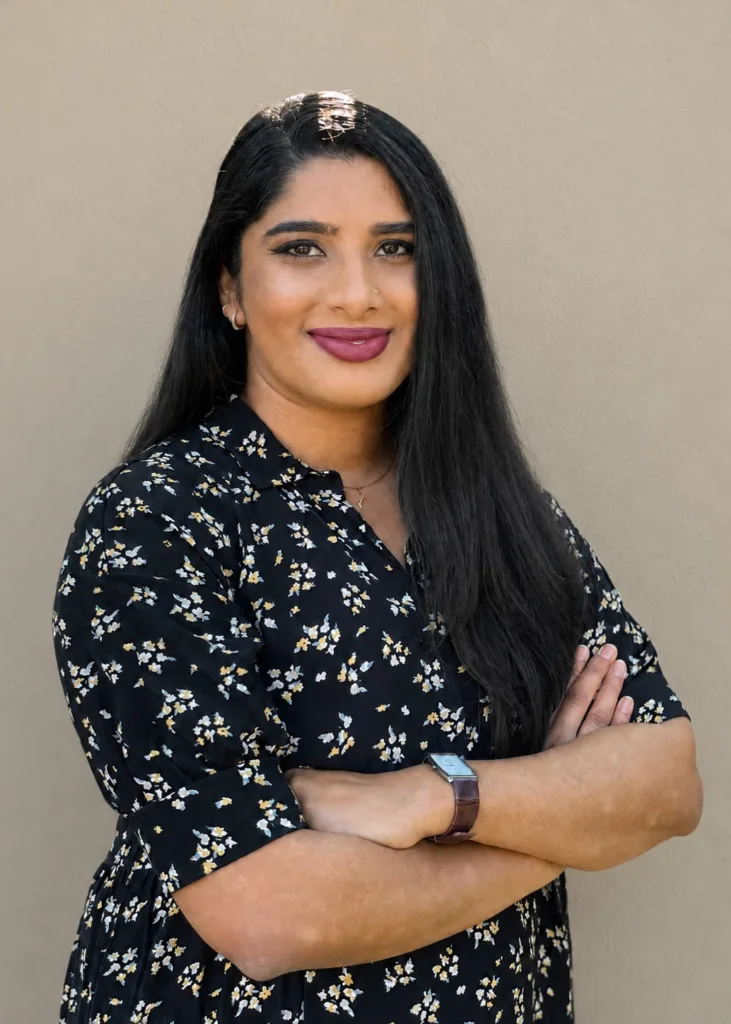
Culturally Responsive Therapy for Identity, Relationships, and Well-Being
My path to becoming a therapist grew from recognizing how many people in my South Asian community were carrying emotional pain without feeling they had a safe place to talk about it. I became especially aware of how cultural expectations, family roles, assimilation, and mental health stigma can shape the way we understand ourselves and whether we feel comfortable asking for support. I wanted to create the kind of space where people can feel understood without judgment and have the freedom to explore parts of themselves they may not have felt able to name before.
A Warm, Collaborative Approach to Therapy
Clients describe me as warm, collaborative, reflective, and personable. I want therapy to feel like a genuine conversation between people, where you can feel comfortable being yourself and exploring what is happening beneath the surface. I listen closely and help clients understand the deeper patterns, relationships, and experiences that may be influencing their lives. When helpful, I incorporate practical, evidence-based approaches, always tailoring our work to your individual needs, goals, and pace.
Anxiety, Depression, Trauma, Grief, and Life Transitions
My clinical experience spans university counseling, community mental health, medical settings, and public health. I have a particular interest in anxiety, depression, life transitions, relationships, identity, self-understanding, trauma, grief, and multicultural identity. My background in public health and health psychology has also shaped my interest in chronic illness and the connection between physical and emotional well-being.
I believe our emotional experiences cannot always be separated from our bodies, relationships, families, communities, or cultures. Understanding the whole person allows us to approach therapy with greater compassion and context.
South Asian and Multicultural Mental Health
I grew up in the Pacific Northwest in a close-knit Indian family, and my cultural background continues to shape the way I understand identity, relationships, and belonging. Growing up with a strong emphasis on family and community taught me the importance of connection, loyalty, and caring for others. At the same time, navigating multiple cultural worlds helped me understand the complexities of balancing individual needs with family expectations, cultural traditions, and a desire for belonging.
I approach conversations about culture and identity with curiosity and openness, recognizing that there is no single way to experience or relate to one’s culture. I want you to know that you never have to leave meaningful parts of your identity at the door when you come to therapy.
Creating Space for Meaningful Change
The most meaningful part of being a therapist is being trusted to walk alongside people during some of their most vulnerable moments. I find it incredibly rewarding to witness the small but powerful changes that happen as clients begin to understand themselves with greater compassion, recognize longstanding patterns, set boundaries, or trust their own voice. Being able to support that growth is a privilege I don’t take lightly.
Life Outside of Therapy
Outside of work, I enjoy spending time with family and friends, dressing in traditional clothing, cooking and baking, and discovering new foods and restaurants. I love traveling and exploring new places, especially when I can experience the local culture and cuisine. When I’m relaxing at home, there’s a good chance you’ll find me watching a Korean drama.


